
 ROOTED IN KASHMIR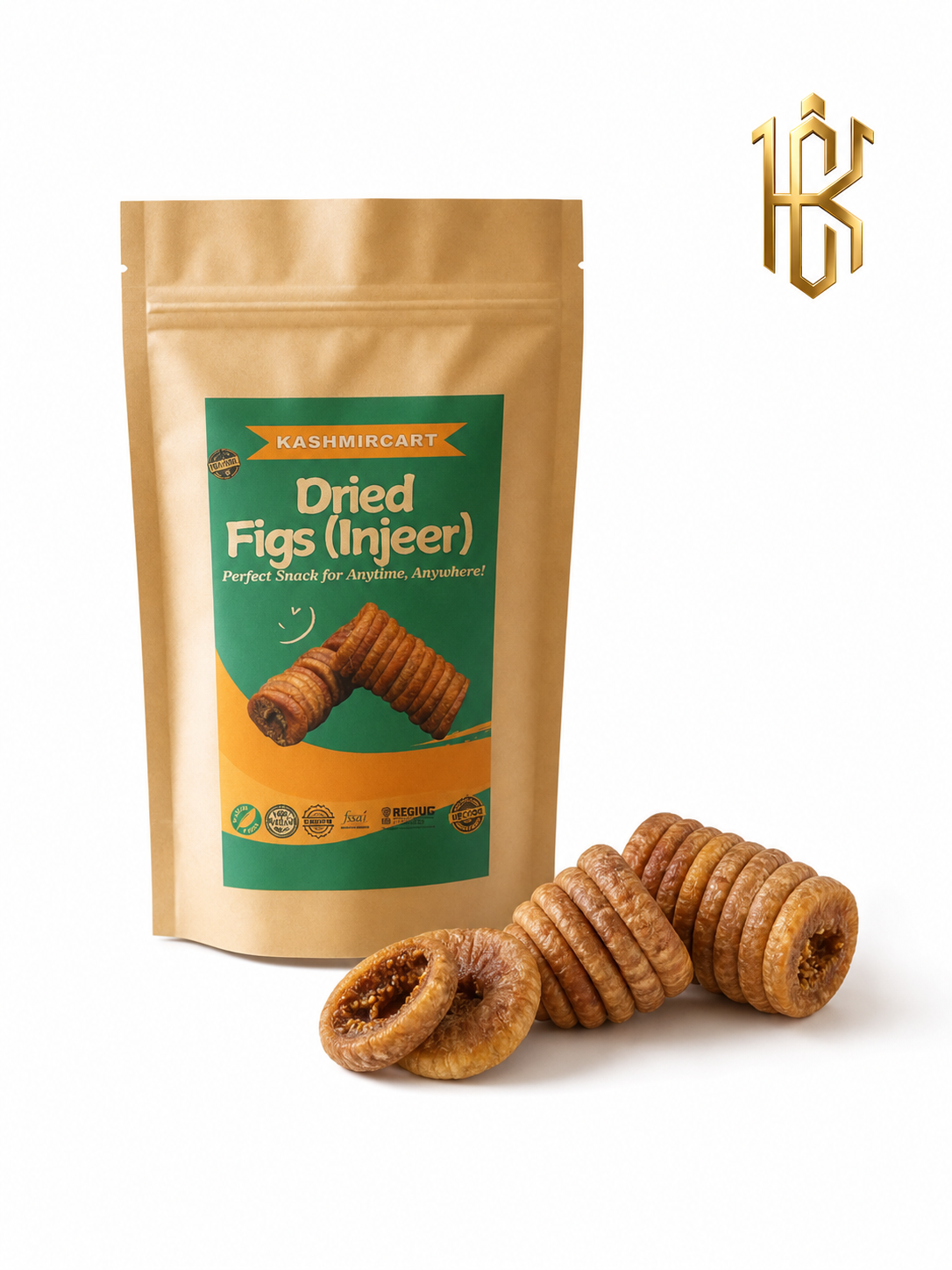





Premium Kashmiri Dried Injeer (Anjeer)
Naturally sweet, pleasantly chewy and filled with tiny edible seeds, dried figs are a timeless addition to the Indian pantry. KASHMIRCART's Premium Dried Injeer is presented for those who appreciate the simple pleasure of dried fruit, thoughtful food choices and versatile everyday ingredients.
Commonly known as anjeer, anjir or dried figs, injeer can be enjoyed straight from the pack, soaked in water, chopped into breakfast bowls or added to traditional desserts. Its naturally sweet flavour makes it an easy ingredient to pair with nuts, milk, oats and other foods.
Discover serving ideas, general nutrition information, storage guidance and answers to common questions about dried figs below.
Naturally Sweet
A rich, fruity sweetness that works in snacks, breakfasts and desserts.
Versatile Ingredient
Enjoy dried figs on their own or combine them with nuts, oats and yoghurt.
Useful Food Facts
Learn about fibre, natural sugars, portion sizes and proper storage.
What Is Dried Injeer?
Injeer is the dried fruit of the common fig tree, botanically known as Ficus carica. As figs lose water during drying, their naturally occurring sugars and other constituents become more concentrated by weight. This gives dried figs their characteristic sweetness and a pleasantly dense texture.
Unlike fresh figs, which contain considerable moisture and have a delicate texture, dried figs are compact, convenient to store and easy to incorporate into different meals. Their small seeds provide a distinctive texture, while their sweet flavour can complement both savoury and sweet recipes.
The name “Kashmiri Dried Injeer” identifies this KASHMIRCART product. The precise growing origin, variety, drying method and ingredient declarations should be confirmed from the current supplier and packaging information.
A Fruit Worth Savouring
Dried figs are appreciated for their concentrated fruit flavour and their ability to bring sweetness and texture to ordinary meals. Individual figs can vary naturally in size, colour and softness.
Sweet, Fruity Flavour
Dried figs have a naturally sweet taste with a mellow, fruit-like character. Their flavour pairs well with nuts, dairy and warm spices.
A Distinctive Seeded Texture
The numerous tiny edible seeds provide a gentle crunch within the soft, chewy fruit.
Convenient for Everyday Eating
Dried figs are easy to portion for a snack or prepare ahead for breakfast and cooking.
Easy to Combine
Their sweetness complements almonds, walnuts, oats, yoghurt, porridge and a variety of homemade desserts.
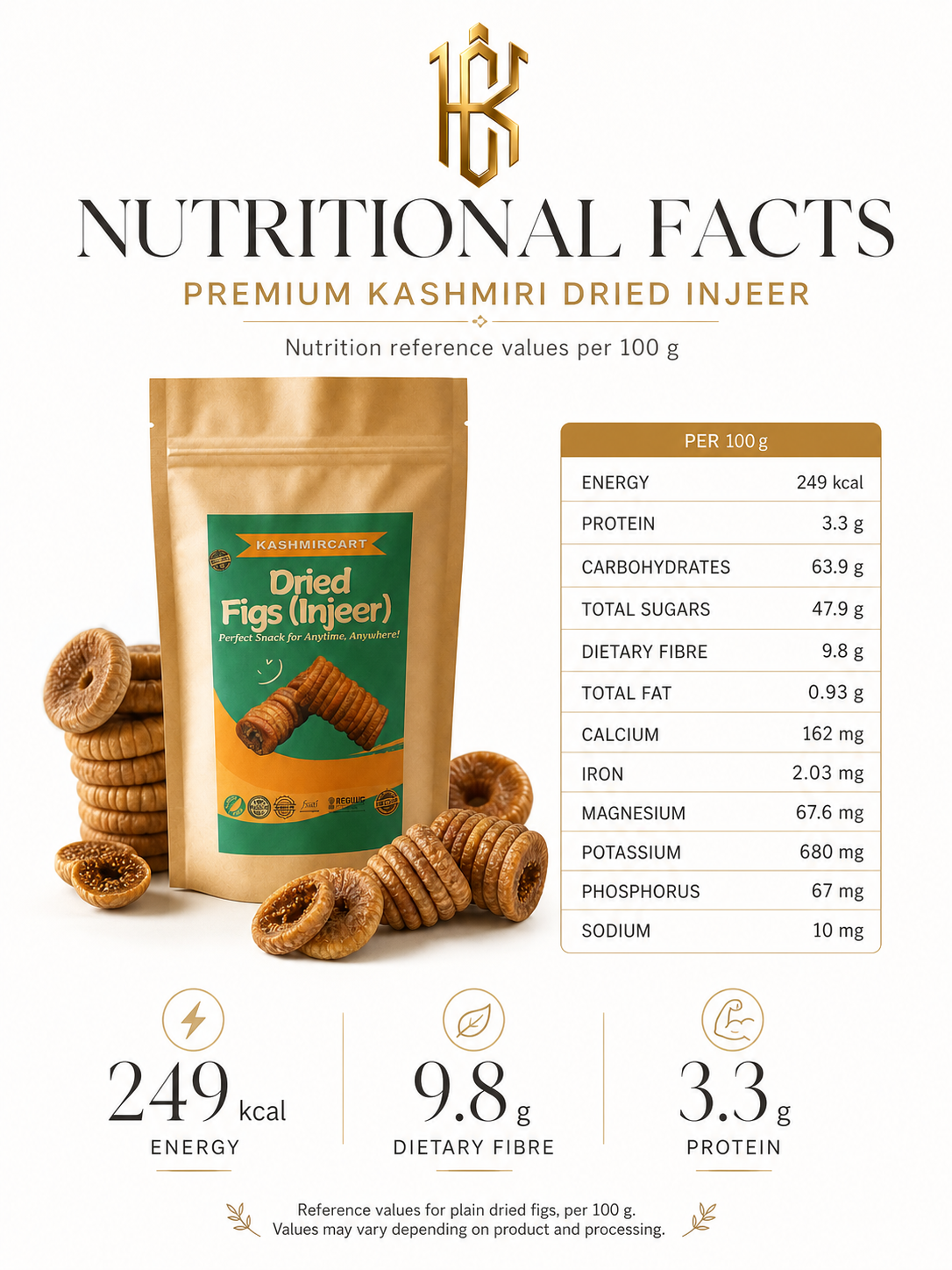
Dried Injeer Nutrition Facts
Dried figs contain carbohydrates, naturally occurring sugars and dietary fibre, along with smaller amounts of protein and fat. They also provide minerals such as potassium, calcium and magnesium. Because drying removes much of the fruit's water, dried figs are more energy-dense per gram than fresh figs.
| Nutrient | General reference per 100 g |
|---|---|
| Energy | Approximately 249 kcal |
| Carbohydrates | Approximately 63.9 g |
| Natural sugars | Approximately 47.9 g |
| Dietary fibre | Approximately 9.8 g |
| Protein | Approximately 3.3 g |
| Total fat | Approximately 0.9 g |
| Calcium | Approximately 162 mg |
| Iron | Approximately 2.0 mg |
| Potassium | Approximately 680 mg |
| Magnesium | Approximately 68 mg |
Important: These figures are general reference values for dried figs, not laboratory results for this specific product. Actual nutrition varies with variety, ripeness and processing. Consult the product packaging for any declared product-specific nutritional information.
Why Include Dried Figs in a Balanced Diet?
Dried figs can contribute useful nutrients to a varied diet. Their nutritional value is best understood as part of an overall eating pattern rather than as a promise of a particular health outcome.
Dietary Fibre
Fibre contributes to normal digestive function. Adequate fibre intake, alongside fluids and a balanced diet, can help support regular bowel movements.
Potassium
Potassium is an essential mineral involved in normal muscle function, nerve signalling and fluid balance.
Calcium and Magnesium
These minerals play important roles in normal bone structure and several everyday functions in the body.
Natural Energy
The carbohydrates in dried figs provide energy. A measured portion can be combined with nuts or yoghurt for a more varied snack.
Dried figs contain concentrated natural sugars. People managing diabetes, blood glucose or carbohydrate intake should consider portion size and their individual dietary advice. People with kidney disease or potassium restrictions should follow their healthcare professional's guidance.
How to Eat Dried Injeer
There is no single required time or method for eating dried figs. Choose the preparation that suits your taste, recipe and dietary needs.
Enjoy as a Snack
Eat dried figs as they are, chewing thoroughly. Pair them with a small portion of unsalted nuts if you want a more varied snack.
Soak Before Eating
Rinse the figs if appropriate, then soak them in clean drinking water in a covered container in the refrigerator. Eat when softened. Discard the soaking water if its cleanliness or storage is uncertain.
Add to Breakfast
Chop dried figs into daliya, oats, muesli or plain yoghurt. Their sweetness can reduce the need for additional sweeteners.
Use in Traditional Recipes
Add chopped figs to kheer, puddings, homemade energy bites, cakes or fruit-and-nut mixtures.
Blend into Smoothies
Blend softened figs with milk or an alternative beverage and complementary ingredients. Account for the fruit's natural sugars.
Pair with Nuts and Cheese
Combine figs with walnuts, almonds or cheese for contrasting flavours and textures on a snack platter.
How Much Dried Injeer Should You Eat?
A practical starting portion for many adults is around 20–40 grams, depending on the size of the figs and individual nutritional needs. This is a serving suggestion, not a medical recommendation or a compulsory daily target.
Because dried figs are concentrated in carbohydrates and calories, measure a portion rather than assuming that an unlimited quantity is appropriate. If you are following a calorie-controlled diet, include the figs in your total daily food intake.
For children, offer an age-appropriate texture and portion, and supervise eating. Dried fruit can be chewy and may pose a choking risk for young children.
How to Store Dried Figs Properly
Good storage helps preserve the taste and quality of dried fruit. Follow any storage directions and best-before information printed on the product packaging.
- Keep the pack sealed between uses.
- After opening, transfer the figs to a clean, dry, airtight container if needed.
- Store in a cool, dry place away from direct sunlight and moisture.
- Refrigerate if the label recommends it or if your home is particularly hot or humid.
- Use clean, dry hands or utensils when handling the fruit.
- Discard the product if you notice mould, unusual fermentation, an off smell or signs of insect contamination.
Dried fruit can sometimes develop pale sugar crystals on its surface, but appearance alone cannot establish whether a product is safe. If you are unsure whether a change is natural crystallisation or spoilage, do not consume it.
Storage duration depends on the product's moisture content, packaging, handling and storage conditions. Use the manufacturer's stated shelf life rather than assuming a universal number of months.
What to Look for When Choosing Dried Injeer
Quality dried figs can vary in appearance because of natural differences between fruit varieties, harvests and drying conditions. When comparing products, consider the following details.
- Ingredient list: Check whether the product contains only figs or includes added ingredients.
- Processing information: Look for clear, verifiable information about drying methods and any permitted preservatives.
- Packaging integrity: Choose an intact, properly sealed food pack.
- Food labelling: Check net weight, batch details, best-before date and the applicable food-business information.
- Origin transparency: Look for a clearly declared country or region of origin supported by the supplier's records.
- Storage directions: Follow the information supplied for that particular pack.
Colour, softness and size alone do not prove purity, origin or the absence of preservatives. Product-specific claims should be supported by reliable supplier documentation or appropriate testing.
Frequently Asked Questions About Dried Injeer
What is injeer called in English?
Injeer, also spelled anjeer or anjir, is commonly known as a fig. Dried injeer refers to dried figs, the fruit of the fig tree (Ficus carica).
What is Premium Kashmiri Dried Injeer?
Premium Kashmiri Dried Injeer is the product offered by KASHMIRCART under this name. For verified information about growing origin, variety, ingredients, processing and packaging, refer to the product label or contact the seller. The product name alone does not confirm where the figs were grown.
Are dried figs naturally sweet?
Yes. Figs naturally contain sugars, which become more concentrated by weight as moisture is removed during drying. Naturally sweet dried figs are not sugar-free, and added sugar depends on the product's ingredients.
Do dried figs contain dietary fibre?
Yes. Dried figs provide dietary fibre, which contributes to normal digestive function. General nutrition references indicate approximately 9.8 grams of fibre per 100 grams of dried figs, although the actual amount varies by variety and processing.
Should I soak injeer before eating it?
Soaking dried figs is optional. It softens the fruit and may make it easier to chew. If you choose to soak them, use clean drinking water and refrigerate them in a covered container. Eat them promptly and avoid consuming fruit that shows signs of spoilage.
How many dried figs should I eat per day?
A portion of approximately 20–40 grams can be a practical starting point for many adults. The appropriate quantity depends on your dietary needs, total calorie intake and health considerations. There is no universally required daily serving.
Can people with diabetes eat dried injeer?
Dried figs contain carbohydrates and naturally occurring sugars. People managing diabetes should consider portion size, total carbohydrate intake and their individual blood glucose management plan. Consult a qualified healthcare professional for personalised dietary advice.
Can dried injeer be included in a weight-management diet?
Yes, dried figs can fit into many balanced eating plans when consumed in appropriate portions. Because drying concentrates calories and sugars per gram, measure your serving and account for it within your overall daily food intake.
Are dried figs vegan and gluten-free?
Plain figs are naturally plant-based and do not inherently contain gluten. However, check the ingredient list and relevant cross-contact information on the KASHMIRCART product packaging before relying on these dietary descriptions for a specific product.
Do dried figs contain added sugar or preservatives?
This depends on the specific product and its processing. Check the ingredient list and food declarations on the current KASHMIRCART packaging to determine whether sugar, preservatives or other ingredients have been added.
How should I store opened dried injeer?
Store dried figs in a clean, dry, airtight container away from direct sunlight, heat and moisture. Follow the storage instructions printed on the packaging. Refrigeration may be appropriate in hot or humid conditions or when recommended by the manufacturer.
How can I use dried injeer in Kashmiri and Indian recipes?
Dried figs can be chopped into daliya, porridge, oats, muesli and yoghurt. They can also be used in kheer, puddings, smoothies, homemade desserts and fruit-and-nut mixtures. Pairing them with almonds or walnuts adds variety to the flavour and texture.
What nutrients are found in dried figs?
Dried figs provide carbohydrates, dietary fibre and smaller amounts of protein and fat. They also contain minerals such as potassium, calcium and magnesium. Exact nutritional values vary, so consult the product label for any product-specific nutrition information.
How can I identify good-quality dried figs?
Check the packaging seal, ingredient list, best-before date, batch details and storage instructions. Natural differences in size, colour and texture can occur between figs. Appearance alone cannot establish purity, growing origin or the absence of preservatives.
Where can I buy Premium Kashmiri Dried Injeer?
Premium Kashmiri Dried Injeer is listed on the KASHMIRCART website. Visit the product page to review the available product details, packaging information and current listing.
Premium Kashmiri Dried Injeer
Product-specific origin, ingredients, net weight, batch information, shelf life, processing claims and dietary declarations should be verified against the actual packaging and supplier records.
Simple Ingredients. Thoughtful Everyday Choices.
From breakfast bowls to traditional desserts, dried injeer brings natural sweetness, distinctive texture and versatility to the everyday pantry. Explore the product information, choose a portion that suits your needs and enjoy it as part of a varied, balanced diet.
Food Information Disclaimer: Nutrition values are general estimates and are not a laboratory analysis of this specific product. This description provides general food information and does not diagnose, treat, cure or prevent disease. Always refer to the product packaging for authoritative product-specific information.


Reviews
There are no reviews yet.