
01, The Short Answer
Raw, unfiltered Kashmiri honey from a known floral belt is better for health than heavily processed regular honey, but neither is a medicine and all honey remains a sugar source.
We are a farming family with roots since 1977. We gather goods from Pampore · Tral and pack them at origin.
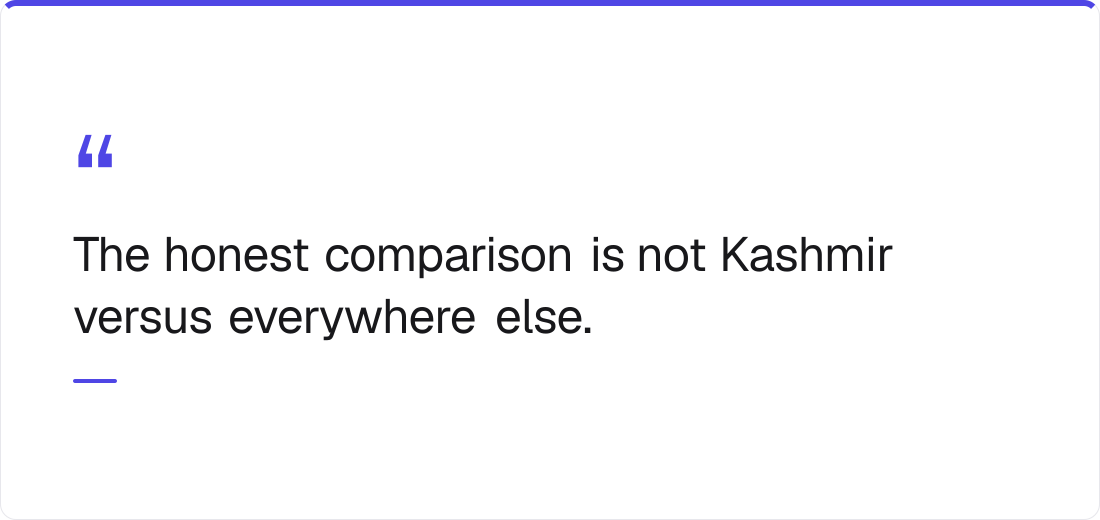
The honest comparison is not Kashmir versus everywhere else. It is raw honey from a known floral belt versus honey that has been blended, heated and filtered until the place is gone. That is the difference worth paying attention to.

| Kashmiri raw honey | Regular honey | |
|---|---|---|
| Source | One valley, often wildflower or forest-based | Often blended from many sources |
| Processing | Minimal, traditional extraction | May be heavily filtered or heat-treated |
| Pollen | Retained when unfiltered | Often reduced or removed |
| Traceability | Can point to a place such as Pampore · Tral | Frequently a country or a blend |
| Role in the body | Still sugar | Still sugar |
02, Pollen, Enzymes, and the Raw Question
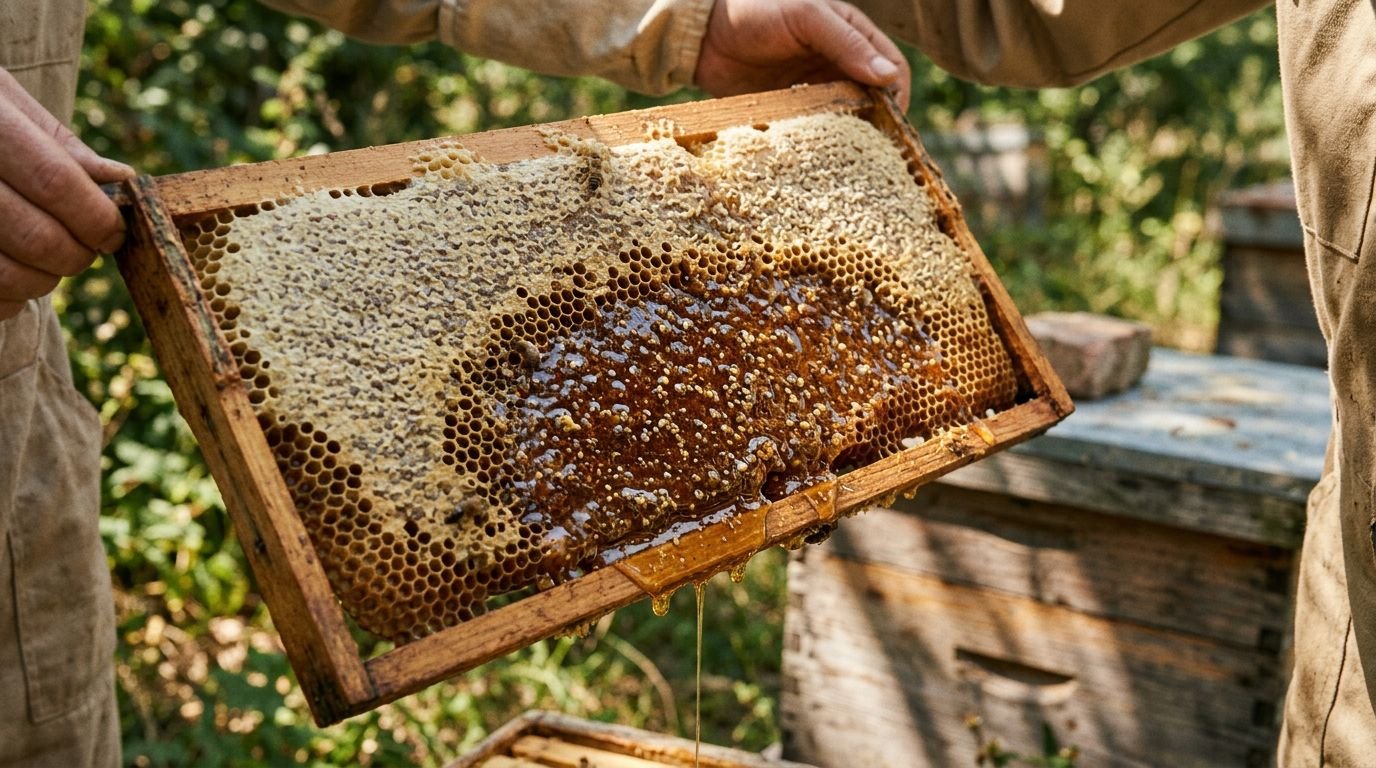
Raw honey is honey that has not been heated beyond hive temperature, so its pollen and enzymes stay intact. That single word, raw, describes process rather than place.
What does raw honey actually mean?
Raw honey means the honey was extracted and jarred without high heat or fine filtration, leaving natural pollen and enzymes in place. Heat is the quiet variable. Once honey is warmed past what a hive reaches, enzyme activity falls and the flavour flattens.
Small-scale producers in the valley often extract by traditional methods. This is why Kashmiri honey is so often sold as raw.
What is the difference between raw and unfiltered honey?
Raw describes temperature; unfiltered describes what stays in the jar. Unfiltered honey keeps wax particles and pollen grains that fine filtration would strip out.
The two terms overlap but are not the same. A honey can be unheated yet strained clean. It can also be coarsely strained and still warmed. Look for both words, and for a producer willing to explain the method.
Why does pollen count in honey?
Pollen tells you where the bees worked, which makes it the closest thing honey has to a fingerprint. Honey with its pollen intact can be traced to its floral source. Honey stripped of pollen cannot.
Pollen is also the reason raw honey looks cloudier and crystallises sooner. That is not a flaw. It is the visible record of the forest floor, the meadow edge and the orchard the bees crossed.
What does lab-tested mean for honey?
Lab-tested means a laboratory has checked the honey for purity and composition, so the claim on the jar rests on evidence rather than description. It is the line between a story and a record.
Ask any honey seller which tests were run and request the report.
03, Health Claims and Hard Truths
Kashmiri honey offers no superior health benefits over regular honey unless it is raw and minimally processed; both remain sugar sources and neither cures illness.

Does Kashmiri honey have more health benefits than regular honey?
Kashmiri honey may keep more pollen diversity and floral compounds than heavily processed honey. The advantage, where there is one, comes from purity and minimal processing.
Wild, high-altitude flora may give a richer pollen picture than a blend from many sources. Location alone does not improve a jar. Handling does.
What can honey do, and what can it not do?
Honey can replace refined sugar in a diet as a more traditional sweetener, but it cannot treat disease or offset a poor diet. Traditional use in Kashmir is cultural and culinary first.
Treat any jar promising cures with suspicion. A seller who speaks in medical absolutes is describing a marketing plan, not a harvest.
Is honey still sugar?
Yes, honey is sugar in every form, and Kashmiri honey is no exception. Quantity matters more than origin.
A spoon in warm water or on the breakfast table is a sensible measure. People managing blood sugar or feeding infants should speak to a doctor before changing how they use any honey.
When does origin matter to the body?
Origin matters when it tells you the honey is unblended, minimally handled and free of added syrups. In that case you know what is in the spoon.
That is a question of trust, not of mountains. A raw honey from a known belt gives you something to verify. A generic blend gives you nothing to check.
04, Reading the Label: Authenticity on the Index
Authentic Kashmiri honey carries lab-tested proof, a named place of origin such as Pampore · Tral, and visible signs of natural handling that regular honey often lacks.

How can you tell if Kashmiri honey is authentic?
Kashmiri honey is authentic when it carries a lab report, a stated place such as Pampore · Tral, and a producer who answers questions about method; authentic raw honey also crystallises over time and carries an aroma tied to its source.
Hold the jar to the light. Fine pollen haze and the odd particle suggest minimal filtration. Perfectly clear, never-crystallising honey deserves a second look.
What certificates should you look for?
You should look for lab-tested certificates that specify the honey’s origin and test parameters, and ask to see them rather than assuming.
Be careful with borrowed credentials. A Geographical Indication, for example, attaches to a region’s produce, as with Kashmir Saffron, and is not a corporate award. Do not read a regional mark on one good as proof about another.
What are the signs of adulteration?
Honey that never crystallises, pours like syrup, smells of nothing or costs very little per kilo may have been thinned or blended. No single sign settles it. Together they should prompt questions.
A seller should be able to say where the honey was gathered and how it was extracted. Vague answers are an answer in themselves.
Is Kashmiri honey worth the higher price?
Kashmiri honey is worth the price if you value single-origin traceability, intact pollen and small-scale sourcing; for plain sweetening, regular honey does the same job. The price reflects provenance and scale, not a health multiplier.
Our Black Pahadi Honey is listed from ₹850. Treat price as a quiet signal. A very low figure for a raw, single-origin honey should raise a question, and a high one is not proof of anything either.
05, The Kashmir Edit: Honey in Context
Honey sits on the same shelf as Kashmiri saffron, Mamra almond kernels and forest produce, all part of one place-specific food culture. Understanding the honey means understanding that larder.
What is the connection between Kashmiri honey and the wider Kashmiri larder?
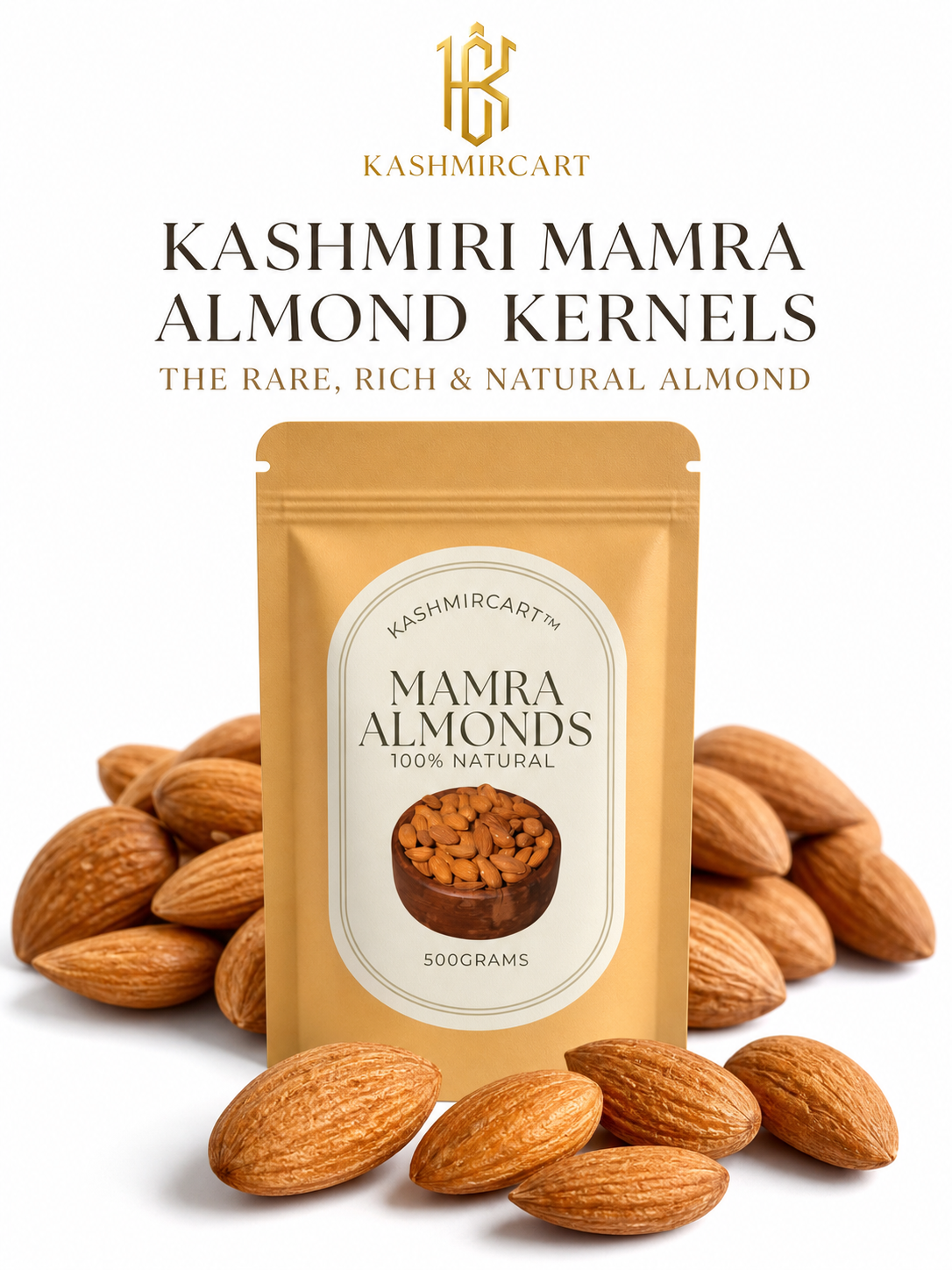
Kashmiri honey belongs to a larder of place-specific goods gathered by families, not factories. The Kashmir Edit holds Mamra almonds and walnut kernels, black Pahadi honey, kahwa, wild gucchi morels, dried berries, spices, saffron and shilajit.
One valley*. Each entry names where it comes from, because place is the point.
Who are the families behind the honey?
The honey comes through a farming family rooted in Pampore and Tral, who gather and dispatch goods directly from Kashmir.
Black Pahadi Honey is described in our catalogue as dark, mountain-sourced and malty. It is one entry among many, kept on the shelf for its origin and not dressed up with promises.
How does honey sit beside saffron and kahwa?
Honey pairs naturally with Kashmiri kahwa, which is built on hand-selected whole spices, unfermented green tea leaves and real Kashmiri saffron. In the high-altitude winters of Kashmir, hospitality begins with a cup brewed in a copper samovar.
Our Kashmiri kahwa blend is 100% natural and sugar-free. A little honey stirred in after the cup has cooled slightly is a traditional-feeling way to sweeten it.

How should you store and use Kashmiri honey?
Store raw honey in a cool, dark place in a glass container, and never heat it above lukewarm. Heat dulls enzymes and flattens flavour.
Use it where its floral notes can be noticed: in kahwa once it has cooled a little, on the breakfast table, in a dressing. Crystallisation is normal. Stand the jar in lukewarm water and it will loosen.
Frequently Asked Questions
Which is better for health: Kashmiri honey or regular honey?
Raw, unfiltered Kashmiri honey with lab-tested proof of purity is a better-informed choice than heavily processed honey, but neither is a medicine. Both are sugar. The real advantage is knowing what is in the jar and where it was gathered.
What makes Kashmiri honey different from regular honey?
The difference lies in origin and process. Kashmiri honey comes from specific floral belts in the valley, often wildflower and forest-based, with minimal processing. Regular honey may be blended from many sources, filtered heavily or heat-treated.
How can I tell if my Kashmiri honey is authentic?
Look for a lab report, a stated place of origin such as Pampore · Tral, and natural signs such as pollen haze and crystallisation over time. Ask the seller how the honey was extracted. Clear answers matter more than a handsome label.
What does raw honey mean?
Raw honey has not been heated beyond hive temperature, so its enzymes and pollen stay intact. Unfiltered honey is a related but separate term, meaning wax particles and pollen grains remain. Look for both.
Is Kashmiri honey worth the higher price?
It is worth it if you want single-origin traceability, wild pollen diversity and support for small-scale Kashmiri sourcing. For general sweetening, regular honey serves the same purpose. The price reflects provenance and scale, not health.
How should I store Kashmiri honey?
Keep it in a glass container in a cool, dark place. Avoid heating it past lukewarm, since heat alters enzymes and flavour. Crystallised honey is still good and can be gently loosened in lukewarm water.
Browse the index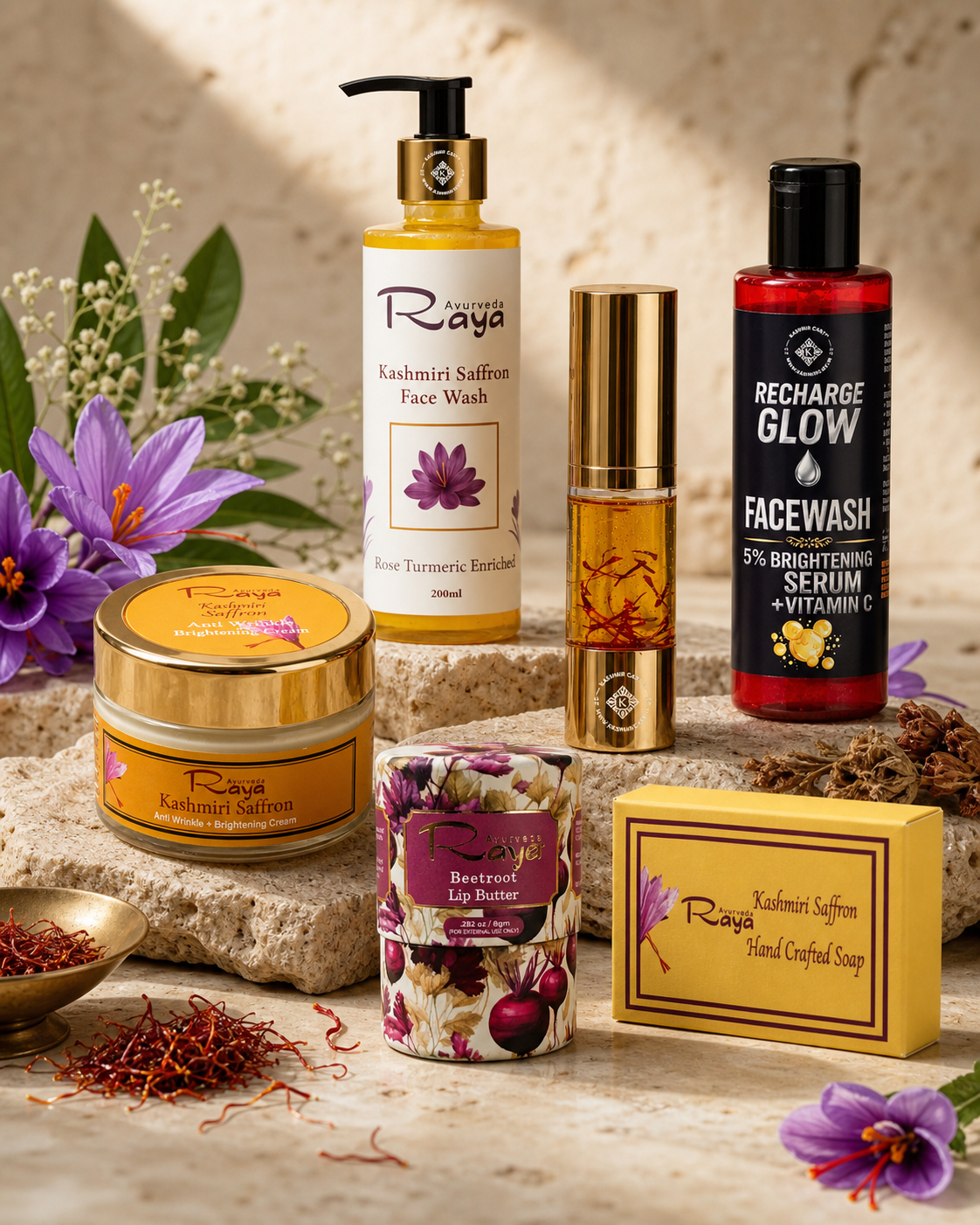




Add comment