
Kashmiri Nuts: Varieties, Uses, Quality Checks and How to Buy
The phrase “Kashmiri nuts” is often used broadly, but a careful buyer should distinguish between nuts traditionally grown in Kashmir, varieties sold by Kashmir-based businesses, and speciality nuts sourced from elsewhere. That distinction matters when you are paying for a stated origin or comparing products online.
This guide focuses on the nuts most relevant to Kashmir’s orchard identity—especially walnuts and almonds—and explains how to assess kernels, compare packs and avoid common buying mistakes.
What nuts is Kashmir especially known for?
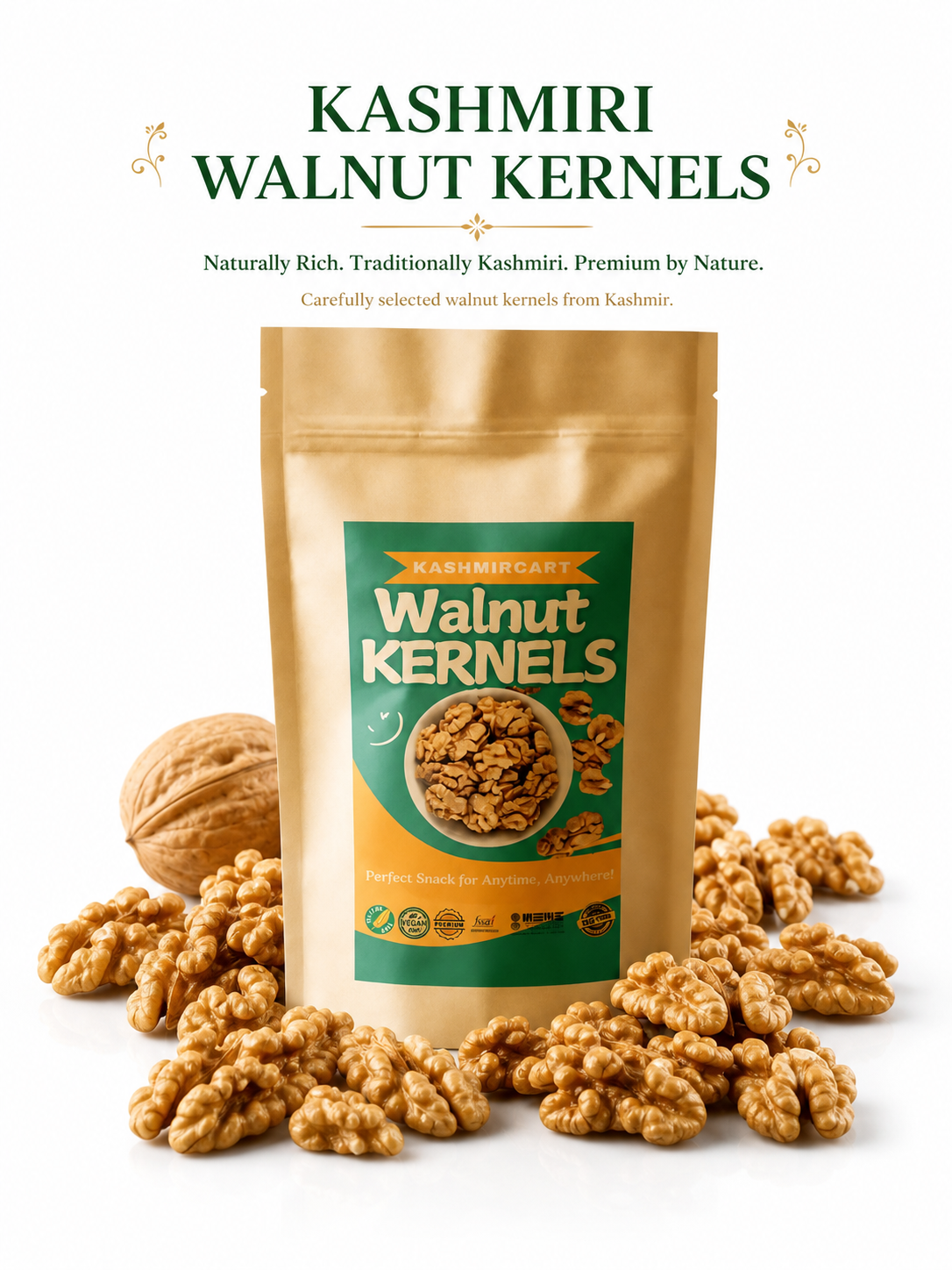
- Walnuts: a major part of Kashmir’s orchard identity, available whole in shell and as kernels.
- Almonds: grown in the region and sold in shell or as kernels; variety and origin should be stated clearly.
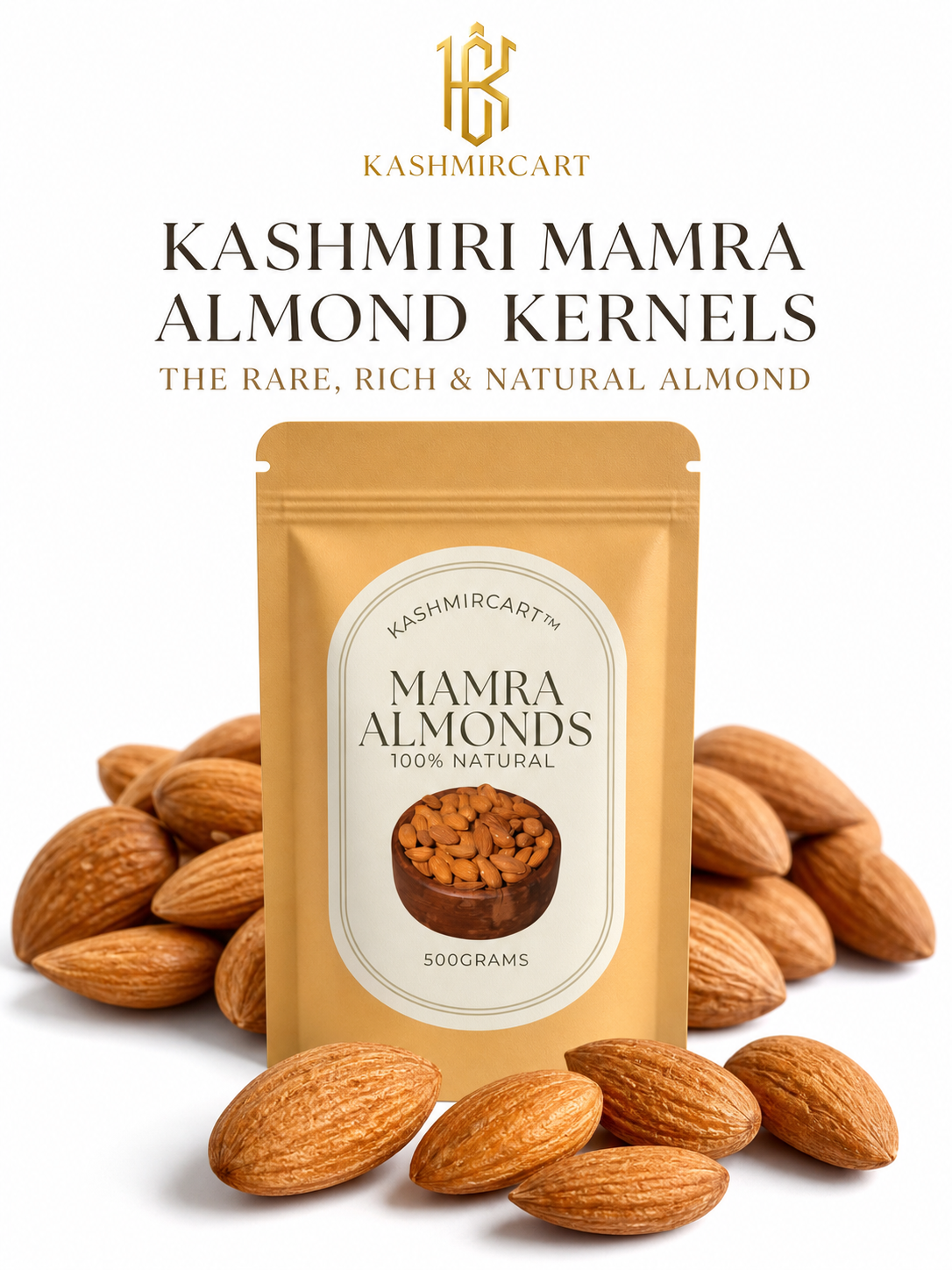
- Mamra almonds: a recognised almond type in the market. Confirm the precise variety and declared growing origin for each pack.
- Pecans, macadamias and other speciality nuts: available through many retailers, but do not assume they are Kashmir-grown unless the seller documents that origin.
Walnuts: whole nuts or kernels?
Whole walnuts retain their shell until cracking, which can help protect the edible portion during storage. They are useful for buyers who prefer to crack nuts as needed. Walnut kernels are convenient for snacking and cooking, but because the edible portion is exposed, packaging and storage become especially important.
Good buying checks include a clean nut aroma, a dry—not damp—texture, minimal foreign material and intact packaging. A bitter or rancid smell can indicate deterioration. Kernel shade naturally varies, and a pale kernel is not automatically fresher or better than a darker one.
Read KASHMIRCART’s walnut-kernel guide and walnut quality checklist.
Almonds and Mamra almonds
Almonds can be eaten as a snack or used in desserts, sauces and traditional dishes. Mamra almonds are often marketed as a premium variety, but marketing language alone cannot verify authenticity, origin or quality. Ask what variety is being sold, where it was grown, how it was packed and what evidence supports any special claim.
Compare almonds by net weight, price per 100 g, kernel condition, freshness, packaging and origin statement. Avoid comparing a small premium pack with a bulk pack using only the total price.
For more detail, see Mamra almonds: origin, varieties and quality.
Pecans and other speciality nuts
Pecans have a soft, rich flavour and are often used in baking, desserts and snack mixes. Macadamias and hazelnuts are also popular speciality nuts. These are not automatically Kashmiri-grown simply because they appear in a Kashmiri product range. Product pages should state the origin honestly and separately from the retailer’s location.
How to compare nut quality
- Origin: distinguish the place where the product was grown from the location where it was packed or sold.
- Variety: look for a specific name rather than a vague premium label.
- Condition: check for dry kernels, a clean aroma and absence of visible mould, insects or unusual moisture.
- Packaging: prefer sealed, food-grade packs that protect against moisture, air and odours.
- Traceability: check batch or lot details, packer/manufacturer information and the best-before date where applicable.
- Value: compare unit price, usable kernel proportion and pack size—not just the headline price.
Nutrition: what nuts can and cannot do
Nuts generally provide energy, unsaturated fats, plant protein, fibre and micronutrients, with the exact profile differing by type and serving size. They can fit into a varied eating pattern, but they are energy-dense foods and are not medicines. No single nut can guarantee weight loss, prevent disease or treat a medical condition.
People with a tree-nut allergy should avoid the relevant nuts and check cross-contact statements. If you have a medically prescribed diet, follow advice from your qualified healthcare professional.
How to store Kashmiri nuts and kernels
Store nuts in clean, dry, airtight packaging, away from direct sunlight, heat and humidity. Keep them away from spices and other strong-smelling foods. For longer storage, some nuts can be refrigerated or frozen in tightly sealed packs. Avoid repeatedly exposing cold nuts to humid air; let a sealed container warm before opening to reduce condensation.
Frequently asked questions
Are Kashmiri walnuts different from other walnuts?
Origin, cultivar, growing conditions, harvest, processing and storage can all influence characteristics. The words “Kashmiri walnut” should be supported by a clear origin statement.
Are Mamra almonds always grown in Kashmir?
No. Mamra identifies an almond type in trade; the growing location must be checked separately on the product information.
Are pecans a traditional Kashmiri nut?
Pecans are a speciality nut sold in many markets. Do not assume Kashmir origin unless the specific product provides credible origin information.
Should I buy whole walnuts or kernels?
Whole walnuts offer shell protection and require cracking; kernels are convenient but need careful sealed storage. Choose according to use and storage habits.
Explore Kashmir-origin products
KASHMIRCART is rooted in Kashmir, with family farming roots dating to 1977 and an online presence since 2016. Browse our nuts and premium dry fruits collection, explore our farms and farming, and review the quality assurance information before choosing a product.
Product availability, origin, pack size and specifications can change. Always rely on the current individual product listing and package label for the item you order.



Add comment